
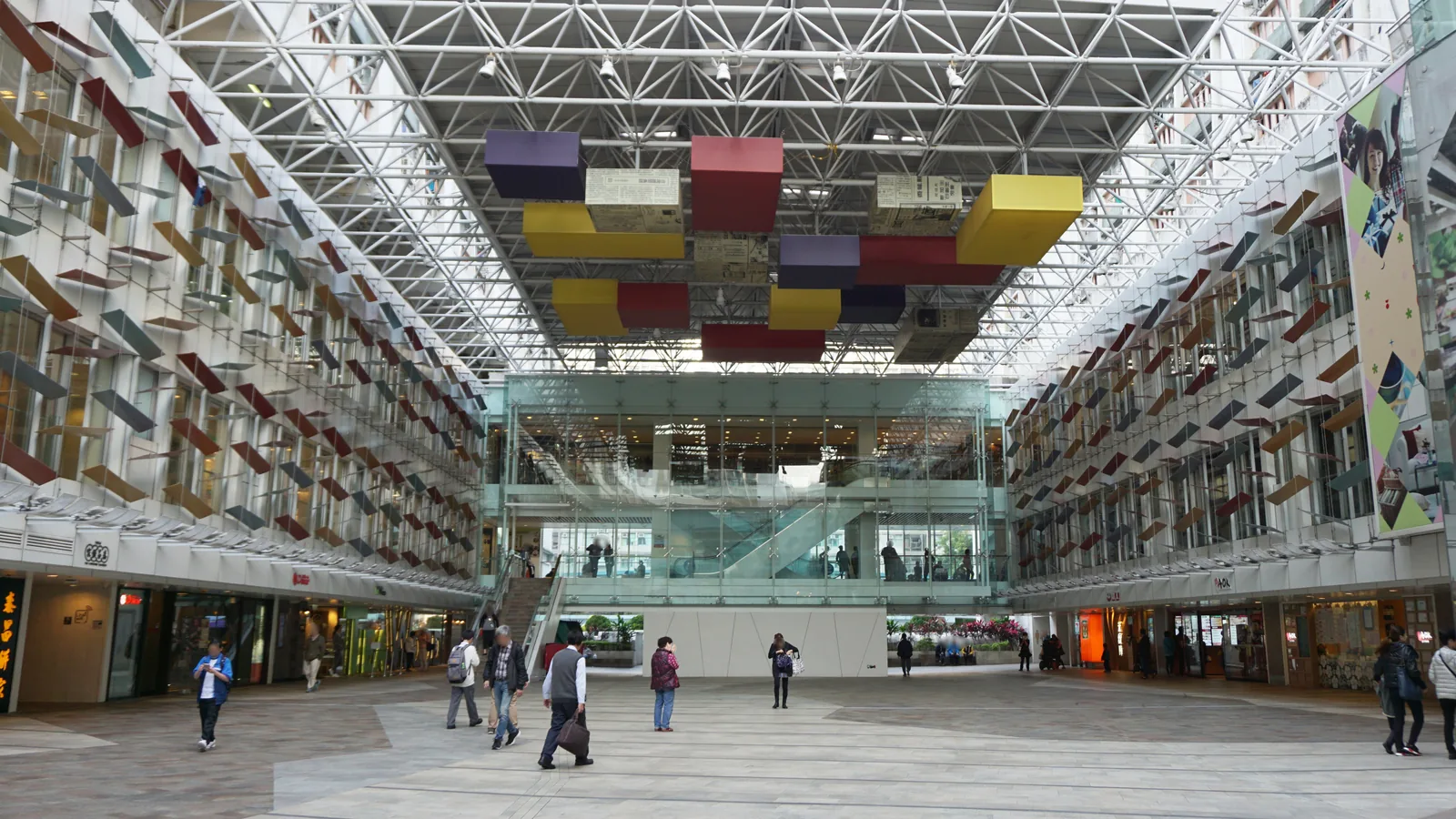
Link REIT's distribution for the six months to September edged up to HK127.25 cents a unit while Hong Kong retail rents on renewal fell 7.5%. The interim results also show how far currency moves can flatter or hide what happened to the buildings themselves.
Link Real Estate Investment Trust, stock code 823 on the Stock Exchange of Hong Kong, published its interim results for the six months to 30 September 2026 on 12 November. The total distributable amount rose 0.4% to HK$3,295 million from HK$3,283 million a year earlier. Per unit, the interim distribution is HK127.25 cents, against HK126.88 cents for the same half last year. It will be paid on 31 December 2026 to holders on the register on the record date of 26 November. Transfers must reach the registrar by 4.30 pm Hong Kong time on 25 November to qualify.
The payout held up even though the business shrank slightly. Revenue fell 1.6% to HK$6,909 million and net property income fell 0.8% to HK$5,135 million. General and administrative expenses fell 20.8% to HK$365 million, which the trust attributes to the full-period benefit of last year's organisational streamlining. Net finance costs, excluding fair value changes that do not affect distributable income, went the other way, up 5.8% year on year, which the trust puts down to higher interest rates.
Hong Kong is where the pressure sits. The Hong Kong retail portfolio produces more than half of total revenue, and its occupancy was 97.0% at 30 September. Rents on renewed and new leases were 7.5% lower than the leases they replaced, and the average monthly unit rent eased to HK$59.4 per square foot from HK$60.1 at 31 March. Revenue from the Hong Kong portfolio as a whole fell 2.7% and its net property income fell 2.9%. Mainland China retail showed a similar pattern, with occupancy of 97.5% and a rental reversion of minus 8.7%. The overseas malls moved the other way. Singapore retail, anchored by Jurong Point, recorded a positive reversion of 8.0% with occupancy of 99.2%, and the Australian retail portfolio a positive reversion of 17.8% with occupancy of 99.8%.
For a cross-border holder, the valuation section is the more useful part. Link reports everything in Hong Kong dollars, so a stronger foreign currency lifts the reported value of an overseas asset even when the building itself is worth less in its own market. The trust separates the two effects for each market.
| Market | Value at 30 Sep 2026 | Value at 31 Mar 2026 | Like-for-like move in local currency |
|---|---|---|---|
| Chinese Mainland | HK$30,472m | HK$29,695m | minus 0.5% in renminbi |
| Australia | HK$10,333m | HK$11,173m | plus 2.0% in Australian dollars |
| Singapore | HK$14,134m | HK$15,074m | plus 1.4% |
| United Kingdom | HK$1,441m | HK$1,584m | minus 9.2% |
The mainland portfolio is the clearest case. In Hong Kong dollars it rose 2.6%, which the trust attributes largely to the renminbi strengthening. In renminbi it fell 0.5%. Australia and Singapore fell in Hong Kong dollar terms mainly because of disposals, a 50% interest in 100 Market Street in Sydney and Swing By @ Thomson Plaza in Singapore, while the remaining assets gained value in local terms. The single London office building lost 9.2% before currency effects as its capitalisation rate widened to 11.50% from 10.00%.
Unitholders do not carry most of that currency risk directly. The trust says its investments in Australia, mainland China, Singapore and the United Kingdom are substantially hedged into HK dollars through local-currency borrowings, cross-currency swaps and forward contracts, so the translation differences were largely offset. Income from those markets is also hedged into HK dollars a year at a time with forwards. The practical reading is that the local-currency column tells a holder how the buildings performed, and the hedged Hong Kong dollar result is what reaches the distribution.
The balance sheet moved modestly. Total portfolio value fell 1.5% to HK$213,298 million, and net asset value per unit fell 1.3% to HK$56.99 from HK$57.75. Net gearing eased to 23.3% from 23.9%. The average all-in cost of borrowing rose to 3.29% from 3.22% a year earlier, with 61.0% of debt at fixed rates. During the half the trust spent about HK$1.5 billion buying back roughly 38.3 million units at an average of about HK$38.5 a unit, well below the reported net asset value per unit. After the period ended, on 30 October, it agreed to sell its mainland logistics portfolio and 700 Nathan Road in Hong Kong.
Sources
Sources read 12 November 2026.
- Link Asset Management Limited, Interim Results Announcement for the Six Months Ended 30 September 2026 and Changes to the Composition of Board Committees (HKEXnews), 12 November 2026, read 12 November 2026
- Link, Lok Fu Place | Link, read 12 November 2026