
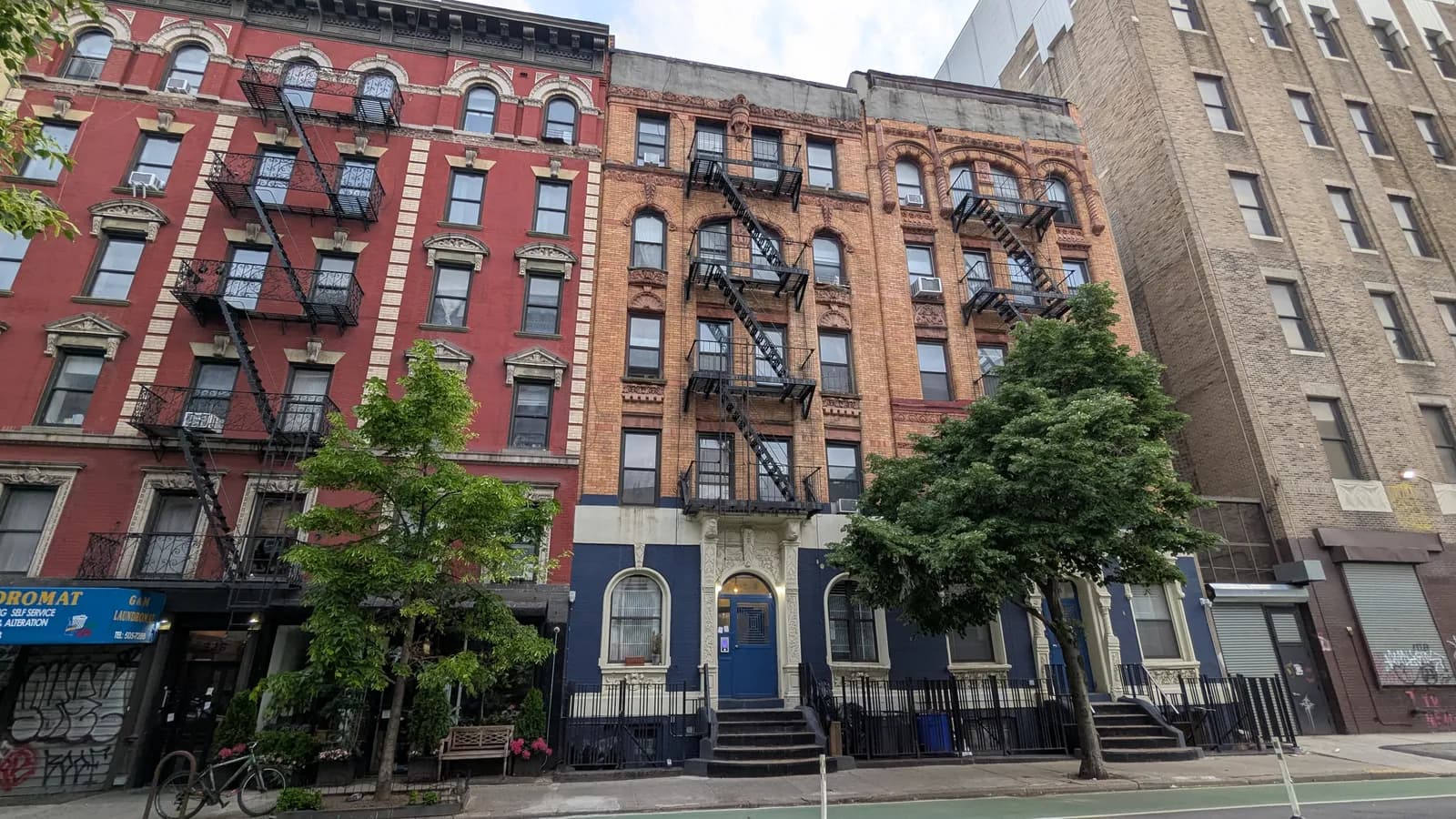
In New York City, the annual increase allowed on a rent-stabilized apartment is set by the city's Rent Guidelines Board, while market-rate apartments, which can be in the same building, are not covered. This year the guideline is zero, and it applies to leases that begin from 1 October 2026.
What the Board decided
The Board adopted Apartment and Loft Order No. 58 on 25 June 2026. The order sets the maximum increase at 0% for a one-year lease and 0% for a two-year lease commencing on or after 1 October 2026 and on or before 30 September 2027. The city's rules portal lists the guidelines as an adopted rule with an effective date of 1 October 2026.
The Board describes its job as setting rent adjustments for the approximately one million dwelling units subject to the Rent Stabilization Law in New York City. Order No. 58 applies the same 0% to apartments in buildings that receive the partial tax exemption under Section 421-a of the Real Property Tax Law, and to Section 423 redevelopment projects. Loft units covered by Article 7-C of the Multiple Dwelling Law also get 0% for both one-year and two-year increase periods.
How the order applies to a lease
The Board's explanatory statement says the guidelines apply to all leases and increase periods. Following guidance from New York State Homes and Community Renewal (HCR), that includes vacant apartments that become occupied during the term of the order as well as renewal leases. No more than one guideline adjustment may be added during the guideline year.
The order treats any lease of up to one year as a one-year lease, and any lease of more than one year and up to two years as a two-year lease. Rent charged and paid above the levels set by the order must be fully credited against the next month's rent. The 0% guideline sits alongside any further adjustments the law separately authorises, which the order does not set.
Two groups fall outside the 0% figure. Hotel, rooming house and single room occupancy units have their own Hotel Order. For apartments under rent control on 30 September 2026 that become vacant after that date, the order sets a special guideline of 49% above the maximum base rent. The Rent Guidelines Board adopts it to help the state housing agency, HCR, decide the first regulated rent when a tenant applies for a review. It is a guideline, not a fixed rent or a cap.
Checking whether a unit is stabilized
Stabilization attaches to particular buildings and apartments, so the first question for an owner is whether the order reaches the unit at all. The Board's own guidance says that, in general, a building with six or more units that is not a condominium or co-operative is the kind where an apartment may be stabilized, and it directs people to HCR, the state agency that administers the rent laws, to confirm the status of a specific apartment. Condominium and co-operative apartments are generally outside rent stabilization. The exception is a tenant who lived in the apartment when the building converted and still holds a stabilized lease. An apartment bought vacant is generally not covered. For an owner who has bought into a building with stabilized tenancies, or who holds an apartment in a 421-a rental building, HCR is the body that confirms the status of each unit.
The cost picture behind the decision
The Board's own research shows costs rising while the guideline stays at zero. Its 2026 Price Index of Operating Costs for rent-stabilized apartments rose 5.3%. Taxes, the heaviest item in the index, rose 2.6%, fuel rose 11.0% and insurance rose 10.5%. Consumer prices in the New York area rose 3.3% over the same period. The Board's income and expense study found that net operating income in buildings with stabilized units rose 6.2% between 2023 and 2024, or 2.2% after inflation.
That income growth was uneven across the city. Net operating income rose 15.1% on Staten Island, 10.0% in Core Manhattan, 9.1% in Upper Manhattan, 6.8% in Queens and 4.4% in Brooklyn, and it fell 0.1% in the Bronx. Those figures run to 2024, so they describe the position before this year's guideline rather than its effect.
For a renter in a stabilized apartment, the practical result is that a lease starting in this guideline year should not carry a guideline increase. For an owner, a year of flat guideline rents against operating costs that the Board measured rising by 5.3% narrows the margin on stabilized units, and that matters most in buildings where income was already weak.
Limits
This update covers rent-stabilized apartments and qualifying loft units in New York City under Order No. 58, for leases and increase periods that begin between 1 October 2026 and 30 September 2027. It does not cover market-rate apartments, units under the separate Hotel Order, or rent-regulated housing outside New York City. The status of a specific apartment is confirmed by HCR, and the full order sets out the terms.
Sources
Sources read 6 October 2026 (SGT).
- 2026 Apartment & Loft Order #58, New York City Rent Guidelines Board, Apartment and Loft Order No. 58, dated 25 June 2026
- Explanatory Statement and Findings of the Rent Guidelines Board in Relation to 2026-27 Lease Increase Allowances for Apartments and Lofts under the Jurisdiction of the Rent Stabilization Law, New York City Rent Guidelines Board, Explanatory Statement for Apartment Order No. 58
- 2026 Price Index of Operating Costs, New York City Rent Guidelines Board, released 9 April 2026, covering April 2025 to March 2026
- Rent Guidelines for October 1, 2026 to September 30, 2027 – NYC Rules, rule status adopted, effective 1 October 2026
- Rent Guidelines Board, New York City Rent Guidelines Board home page (adoption date of 25 June 2026; approximately one million stabilized units)
- Rent Stabilization FAQs – Rent Guidelines Board, New York City Rent Guidelines Board
- Co-ops & Condos FAQs – Rent Guidelines Board, New York City Rent Guidelines Board