Prices and market data
Gangnam's reconstruction blocks slip as mid-priced Seoul keeps rising
Seoul's north-eastern districts have outpaced the south-east all year, according to the Korea Real Estate Board's weekly price survey. Since early August the gap has widened, and two of Gangnam's best-known reconstruction complexes have recorded contracts below prices agreed in July and early August

- Prices and market data
- Buildings and developments
- Seoul, South Korea
- News brief
- Data as of 21 September 2026
- Official sources
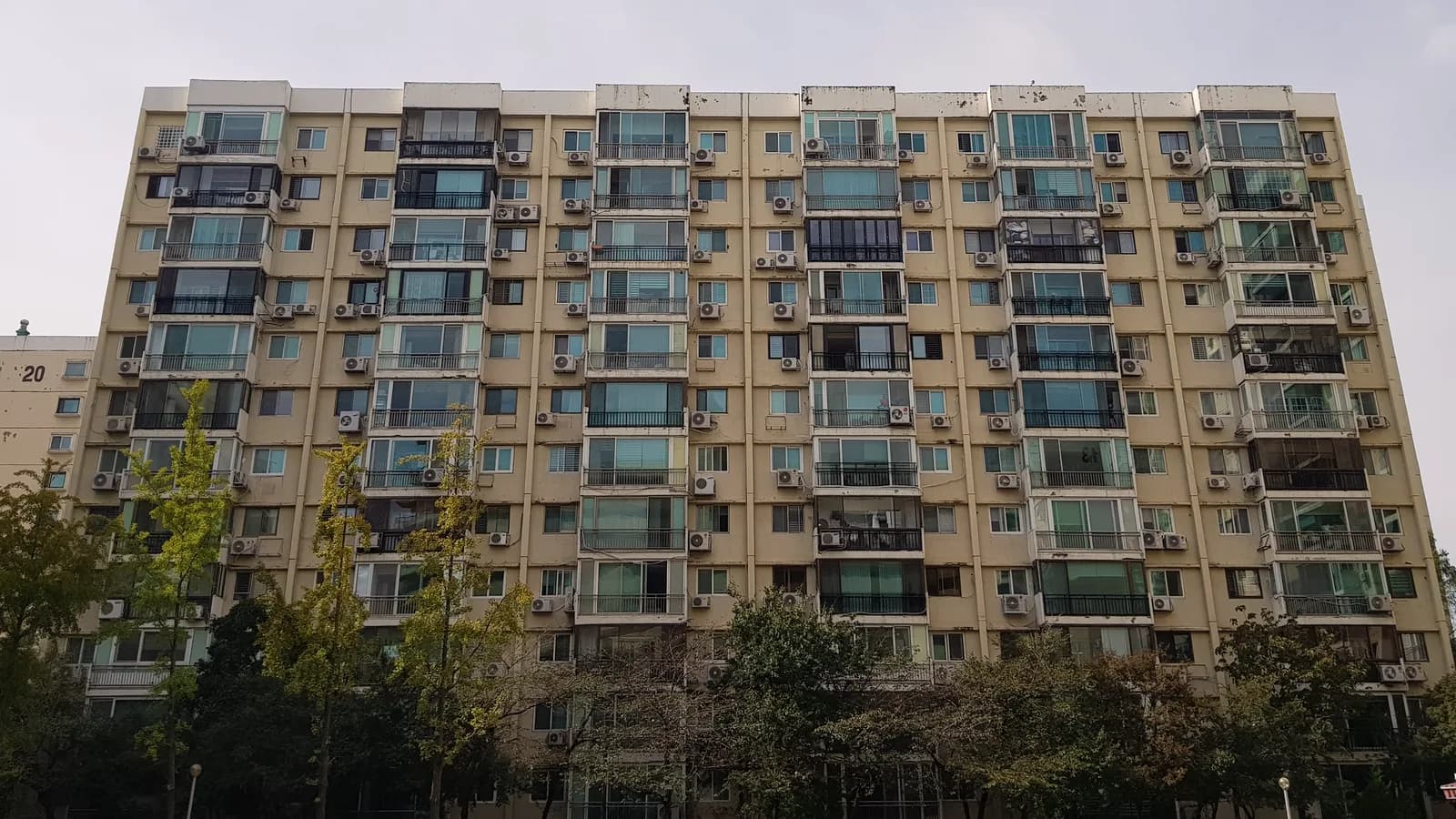
Seoul's apartment market has been running at two speeds for all of 2026. The Korea Real Estate Board (한국부동산원, KREB) groups the city's 25 districts into five zones in its weekly apartment price survey. By the survey week dated 3 August, the north-eastern zone (동북권) had risen 7.80 per cent since the start of the year and the south-eastern zone (동남권) 3.82 per cent, a lead of 3.98 percentage points. Over the seven weekly surveys since then, covering the weeks dated 10 August to 21 September, the north-east rose by a further 2.49 per cent while the south-east fell by 0.49 per cent. By 21 September the north-east was up 10.48 per cent for the year and the south-east 3.31 per cent.
The new element since August is the direction of travel in the south-east. Gangnam-gu and Seocho-gu have posted weekly declines, and two reconstruction complexes in Gangnam, Eunma in Daechi-dong and Gaepo Jugong 7 in Gaepo-dong, have recorded contracts more than 300 million won below deals signed in July and early August, according to the government's transaction register.
Two price levels
The two sides of the city start from very different price levels. The Korea Real Estate Board's monthly housing price survey gives a median apartment sale price for August 2026 of ₩2.61 billion in both Gangnam-gu and Seocho-gu, against ₩649 million in Nowon-gu and ₩583 million in Dobong-gu. Per square metre, Gangnam's median of ₩28.7 million is about 2.8 times Nowon's ₩10.3 million. These are survey valuations of representative homes, which the board says suit comparing areas within the same month. Reported deals show the same gap. Seoul's Real Estate Information Plaza gives an average reported apartment transaction price of ₩3.04 billion in Gangnam-gu for contracts signed in August 2026, and ₩707 million in Nowon-gu, figures the site says can still change as reports arrive. The northeast is also not one market. The board's northeast zone includes Seongdong-gu and Gwangjin-gu on the Han River, with August medians of ₩1.75 billion and ₩1.50 billion, both above Gangdong-gu's ₩1.19 billion.
What the weekly survey shows
The table below sets the year to 3 August beside the seven weeks that followed. The first and last columns are the cumulative 2026 changes KREB prints in its releases for the weeks of 3 August and 21 September. The middle column is derived from those two figures, and compounding KREB's seven weekly changes gives the same result to within 0.01 of a point.
| Area (KREB weekly apartment sale price index) | 2026 to week of 3 Aug | Weeks of 10 Aug to 21 Sep | 2026 to week of 21 Sep |
|---|---|---|---|
| Seoul, all districts | +6.56% | +1.44% | +8.09% |
| North-eastern zone (동북권) | +7.80% | +2.49% | +10.48% |
| South-eastern zone (동남권) | +3.82% | -0.49% | +3.31% |
| Gangnam-gu | +2.04% | -1.71% | +0.30% |
| Seocho-gu | +3.06% | -1.32% | +1.70% |
| Songpa-gu | +5.29% | +0.04% | +5.33% |
| Mapo-gu | +6.75% | +1.43% | +8.28% |
| Yongsan-gu | +3.42% | +0.47% | +3.91% |
| Seongdong-gu | +6.72% | +0.84% | +7.62% |
| Nowon-gu | +8.12% | +2.79% | +11.14% |
| Seongbuk-gu | +10.85% | +3.26% | +14.46% |
Across the seven weeks, the north-eastern zone gained about 2.98 percentage points on the south-eastern zone. Because the index changes compound, the year-to-date gap does not simply add up, and by 21 September the difference between the two zones' 2026 changes stood at 7.17 points, against 3.98 points on 3 August.
Seoul as a whole is still rising, but each week by less. KREB's weekly change for the city was 0.29 per cent for the week of 24 August, then 0.22, 0.20, 0.16 and 0.13 per cent for the four weeks that followed. In the week of 21 September, Gangnam-gu fell 0.42 per cent, Seocho-gu 0.37 per cent and Songpa-gu 0.14 per cent, while Seongbuk-gu and Nowon-gu rose 0.39 and 0.37 per cent.
KREB's own commentary points at reconstruction stock. Its release for the week of 17 August describes Seocho's decline as led by reconstruction-track complexes in Jamwon-dong and Banpo-dong. Its release for the week of 31 August notes falling deals among some reconstruction-track complexes offered at reduced asking prices, alongside continued gains in small and mid-sized units, complexes near stations and large estates. That matters for the split, because Seocho has far more reconstruction stock than Nowon. Seoul's official redevelopment information system lists 61 reconstruction sites in Seocho-gu against 18 in Nowon-gu, counting every stage from projects yet to form a promotion committee to associations being wound up after completion. Nowon's sites are also at an earlier stage, with 11 of its 18 yet to form a reconstruction association, against 6 of Seocho's 61.
What the transaction register shows
The Ministry of Land, Infrastructure and Transport (MOLIT) publishes reported contract prices in its real transaction price system. The records used here were downloaded on 29 September 2026 for contract dates from 29 September 2024 to 28 September 2026. The system warns that its figures are for reference only, that reports can be amended or cancelled after publication, and that official statistics should be compiled on a reporting-date basis. Floors differ between some of the paired deals, which affects price, so each pair is a guide rather than a like-for-like valuation.
| Complex (district) | Exclusive area | Earlier contract | Later contract |
|---|---|---|---|
| Eunma, Daechi-dong (Gangnam) | 76.79 ㎡ | 3.34 billion won, 1 Aug 2026 (3rd floor) | 3.02 billion won, 11 Sep 2026 (2nd floor) |
| Gaepo Jugong 7, Gaepo-dong (Gangnam) | 83.70 ㎡ | 3.83 billion won, 18 Jul 2026 | 3.50 billion won, 22 Sep 2026 |
| Sanggye Jugong 7, Sanggye-dong (Nowon) | 49.94 ㎡ | 650 million won, 25 Apr 2026 | 780 million won, 17 Sep 2026 |
The 3.02 billion won Eunma contract gives an overseas reader a sense of scale. At the European Central Bank reference rates for 28 September 2026, which put the euro at 1,545.05 won and at 1.4538 SGD, it works out to about 2.84 million in the Singapore currency. The ECB had not yet published its 29 September rates when the page was read.
Away from Gangnam, some mid-priced complexes recorded the highest price for their unit size in the two years of records checked. A 59.75 ㎡ unit at Mapo I-Park Fore in Sinsu-dong, Mapo, sold for 2.145 billion won on 12 September. An 84.98 ㎡ unit at Lotte Castle Classia in Gireum-dong, Seongbuk, sold for 1.93 billion won on 15 September.
These contracts show where prices moved, and they line up with KREB's zone figures. They do not show why.
The policy backdrop
Several policy changes form the backdrop to these prices, and the data do not single out any one of them as the cause. The Ministry of Economy and Finance published its 2026 tax reform plan on 3 August, proposing to base the comprehensive real estate holding tax (종합부동산세) on home value and on whether the owner lives in the home. The Cabinet approved a revised version on 1 September and sent the bills to the National Assembly, where they remain under review, and the changes would apply from the 2027 tax year if passed. Mortgage limits in regulated areas, which since October 2025 include all of Seoul, cap loans at 200 million won for homes above 2.5 billion won. Apartment purchases across all 25 districts have required a district permit and a two-year residence commitment since 20 October 2025, and a separate permit zone for foreign buyers covers the whole city. The north-east's lead over the south-east predates the tax plan, having reached nearly 4 points by the week of 3 August.
For how these rules apply to an overseas buyer or owner, including the permit zones, the reports required, loan limits and the holding tax as it stands and as proposed, see the guide Buying and holding a Seoul home as a foreigner.
This is not legal, tax, or investment advice. Confirm with a qualified professional in the place.
Sources
Sources read 29 September 2026.
- Korea Real Estate Board, weekly apartment price trend, week of 3 August 2026 (Released 6 August 2026, with release PDF.)
- Korea Real Estate Board, weekly apartment price trend, week of 10 August 2026
- Korea Real Estate Board, weekly apartment price trend, week of 17 August 2026 (Seocho decline led by reconstruction-track complexes in Jamwon-dong and Banpo-dong.)
- Korea Real Estate Board, weekly apartment price trend, week of 24 August 2026
- Korea Real Estate Board, weekly apartment price trend, week of 31 August 2026 (Falling deals in some reconstruction-track complexes at reduced asking prices.)
- Korea Real Estate Board, weekly apartment price trend, week of 7 September 2026
- Korea Real Estate Board, weekly apartment price trend, week of 14 September 2026
- Korea Real Estate Board, weekly apartment price trend, week of 21 September 2026 (Released 24 September 2026, with release PDF.)
- Korea Real Estate Board, R-ONE open data, monthly median apartment sale price by district, August 2026 (table A_2024_00062, Gangnam-gu shown) (Other districts by CLS_ID, Seocho 530037, Nowon 530022, Dobong 530021, Seongdong 530015, Gwangjin 530016, Gangdong 530040.)
- Korea Real Estate Board, R-ONE open data, monthly median apartment sale price per square metre, August 2026 (table A_2024_00063, Nowon-gu shown)
- Korea Real Estate Board, R-ONE table notes on average and median prices
- Seoul Real Estate Information Plaza, apartment trend and average transaction price (Contract month August 2026.)
- Seoul Metropolitan Government, redevelopment information system, reconstruction projects by district (Seocho-gu 61 and Nowon-gu 18 reconstruction projects, all stages.)
- Ministry of Land, Infrastructure and Transport, real transaction price system, apartment sale data download (By district, contract dates 29 September 2024 to 28 September 2026, downloaded 29 September 2026.)
- European Central Bank, euro foreign exchange reference rates (Rates for 28 September 2026, crossed via the euro for the one currency conversion in the text.)
- Ministry of Economy and Finance, 2026 tax reform plan, 3 August 2026
- Ministry of Economy and Finance, government bills confirmed by the Cabinet, 1 September 2026
- Korea.kr, housing market stabilisation measures, 15 October 2025 (Regulated areas, loan caps and permit zone.)
- Korea.kr, housing market stabilisation measures press release, 15 October 2025
- Ministry of Land, Infrastructure and Transport notice 2025-1219, all-Seoul apartment permit zone (PDF) (From 20 October 2025.)
- Ministry of Land, Infrastructure and Transport notice 2026-1105, foreigner housing permit zone (PDF)
- Ministry of Economy and Finance, 2026 tax reform plan overview and real estate tax questions and answers (Loan caps, question 11.)