Prime markets
How to read a prime-price survey
A high purchase price is the cost of entry for a particular kind of prime home, not the rent, the time a sale takes, or a forecast. This page shows how to read a prime-price survey without treating the order as a finished ranking.

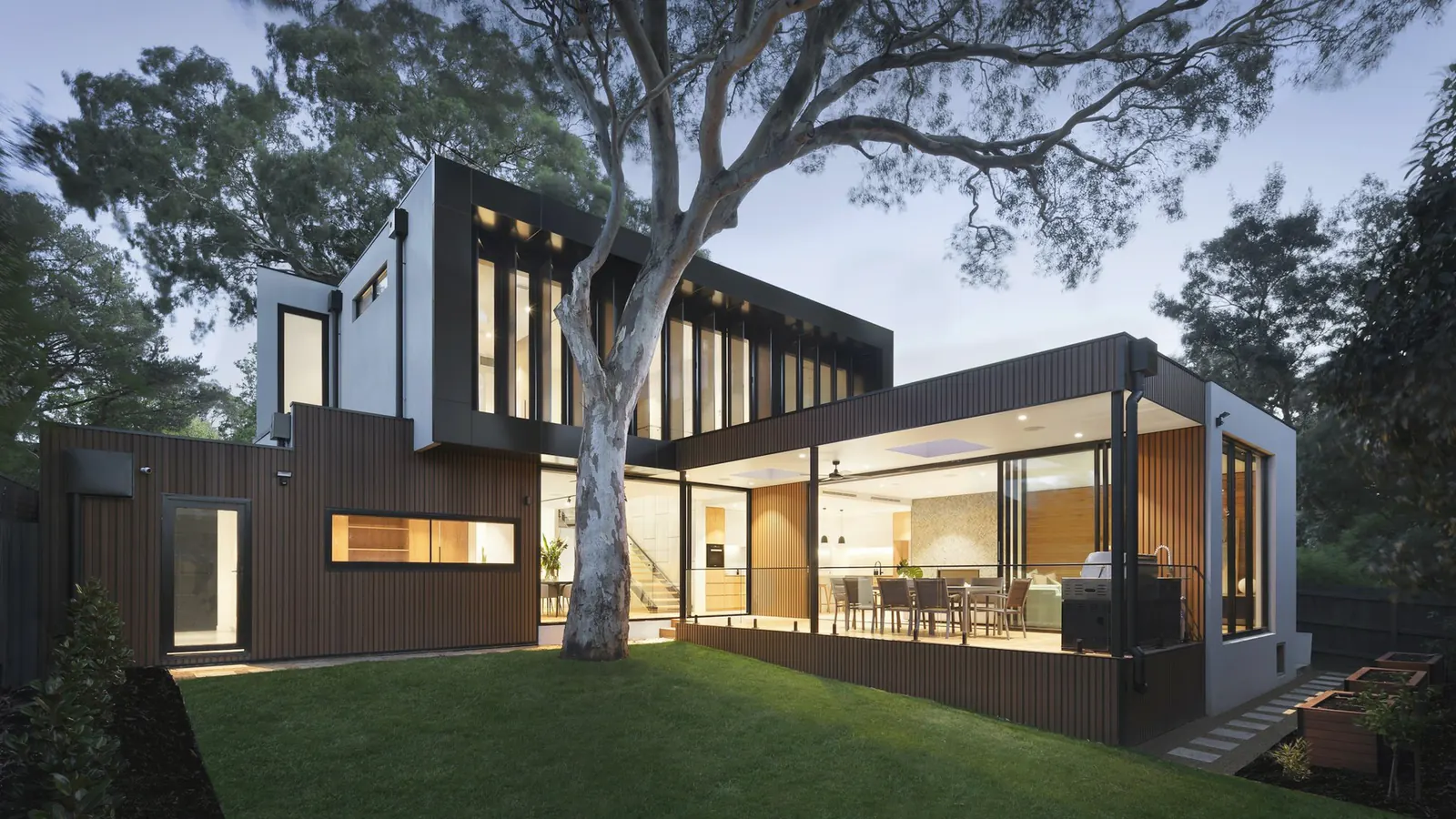
A high purchase price tells you what it costs to buy a particular kind of home. By itself it does not tell you the rent, how long a sale will take, or whether the price will be higher in five years. Brokerage surveys still put cities in order by prime purchase price. This page is how to read those surveys. It starts with what the buyer is paying for, then with what the edition actually counted.
This page does not reprint a ranked list, table, or chart from a prime-price survey. Where a survey fact appears in commentary, it carries the report name, the year, and a link. Name the sample, the date, and the currency before you treat a first place as a fact you can underwrite. Figures age quickly. They often mix a handful of prime apartments with the price of an entire city.
What the buyer is paying for
Start with the plan, materials, and district definition before you look at the price, because those are what a buyer is actually paying for. They do not describe what the buyer will earn while holding it.
Calling a city expensive means it costs a lot to buy a given kind of home there. In these markets the kind of home is prime stock, which is a local category defined by the survey or by planning labels, not by atmosphere. Rent is a later question. So is the time a sale takes, and so is any guess about the price in five years. Those questions need their own numbers. The market with the highest entry cost is often a market where a great deal of money has already arrived, or where scarce prime homes are used to hold wealth. Those are reasons to study the purchase. They are not a yield.
What the survey is counting
When a report ranks cities by prime price, check what was counted before you repeat the sentence.
- Prime versus mainstream. A survey of trophy apartments records the price of a particular kind of room. An ordinary home in the same city is a different count. The gap inside one city can exceed the gap between two countries.
- Price per area versus the price of a dwelling. A small, costly flat and a large, costly house change places in a ranking when the survey switches from one measure to the other.
- Asking prices versus completed sales. A listing records the price someone hopes to receive. The figure that matters for an investment is the price at which a home actually changed hands.
- Whose currency. A city can look more expensive in a headline because its currency rose, while the local price stayed the same. For a buyer who earns in that currency, those are different events. The international guide separates them.
- Which edition, and which firm. Brokerage surveys disagree with one another, and they are revised. If you cite a number, cite the edition it came from. A first place in a given year belongs to that edition.
Two editions are worth reading if you want a figure. Read them with the sample, the date, and the currency beside any number you take.
Knight Frank’s Wealth Report 2026 (20th edition) carries its prime international residential reading. In that edition’s measure of how much prime space US$1 million bought in 2025, Monaco was the most expensive market named: about 16 square metres, or roughly US$62,500 per square metre. That is one attributed fact from that edition, not a reprint of its ordered list. I read that report on 26 September 2026.
The UBS Global Real Estate Bubble Index 2026 scores selected cities for bubble risk rather than dollars per square foot. In that edition, Zurich showed the highest bubble risk among the cities in the study. That score is a risk reading, not a price ranking, and this page does not turn either edition into a Realtopedia shortlist. I read that report on 26 September 2026. A city name below is a place to read the kind of room the surveys mean.
Cities surveys keep naming
The same names recur across prime-price surveys such as Knight Frank’s Wealth Report and the UBS Global Real Estate Bubble Index. Sections below cover Monaco, Hong Kong, New York, London, Singapore, Geneva, and Paris. These are cities that keep appearing, not a copied survey order and not a Realtopedia ranking. Do not read the sequence as first through seventh.
Other cities appear in the same editions. They do not get a section here, because I have not read a local sample for them.
For each city, the first stretch says what “prime” usually means in that market. The next stretch says why the purchase price stays high. Purchase-price figures, sample sizes, and survey years stay with the editions named above, unless a single attributed fact is cited in place.
Monaco
A prime home in Monaco is usually in Monte-Carlo, and often in the Carré d’Or, where the rooms face the casino gardens or the harbour. Larvotto, along the eastern shore, and Fontvieille, on land reclaimed to the west, are the other addresses surveys tend to mean. The principality is about two square kilometres. That is the constraint.
Expensive, for Monaco, means the purchase price of that scarce prime apartment or villa. New stock appears slowly because there is little land left to build on, and buyers arrive with savings from elsewhere. The purchase price is the cost of entry, separate from rent and from what a later sale returns. The Wealth Report 2026 fact above (Monaco as the dearest market in that US$1 million / square-metre reading for 2025) is the kind of attributed figure that belongs beside the sample. Take further Monaco numbers from the same Wealth Report or the UBS Global Real Estate Bubble Index, with date and currency attached.
Hong Kong
Prime in Hong Kong is a set of hillsides and a few towers, not the whole harbour. Houses and low blocks on the Peak, Jardine’s Lookout, and the south side around Repulse Bay are one stock. High-floor apartments in Mid-Levels, and the towers above Kowloon Station, are another.
The price stays high because sites on those slopes are few, and because outside capital has long treated a Hong Kong apartment as a way to hold assets in a market with a deep resale book. The extra stamp duties that used to sit on many non-resident purchases are no longer the explanation. The Inland Revenue Department’s notice of 28 February 2024 records that Special Stamp Duty, Buyer’s Stamp Duty, and the New Residential Stamp Duty ceased to be charged on residential transactions from that day. Ad valorem stamp duty remains. I read that notice on 24 September 2026. It describes the tax on the way in, not the rent.
Knight Frank and UBS can disagree on the price, on how many sales sit behind it, and on the year of the edition. Leave that disagreement between the editions, and keep the sample attached to whichever figure you use.
New York
The prime home these surveys usually mean is a Manhattan apartment. The streets that recur are Fifth Avenue and Central Park West facing the park, the Upper East Side blocks just off them, Tribeca, and the supertall flats along 57th Street.
The stock splits in a way a local buyer knows and a brochure often skips. A co-operative apartment is shares in a corporation plus a proprietary lease. The board can refuse a purchaser. A condominium is real property, and foreign buyers have more often used condos for that reason. The entry cost is the purchase price of that prime floor, plus the transfer taxes the city and the state put on the deed. If a survey switches from price per square foot to the price of the whole dwelling, a townhouse and a small high floor can change places. An asking price is what a seller hopes to receive. The figure that matters is the price at which a home was transferred, in the currency the edition uses, and in the year printed on that edition.
London
The addresses surveys mean are not “London.” They are Prime Central London, above all Mayfair, Belgravia, Knightsbridge, Kensington, and Chelsea. Houses in St John’s Wood and Notting Hill sit in the same conversation when the dwelling, rather than the flat, is what was counted.
The price stays high because new homes on those streets are slow to appear, and because buyers continue to arrive from other currencies. Many of the flats are leasehold, so the purchase includes a wasting interest and a service charge, not only the bricks. Transaction costs sit on the same purchase. From 1 April 2021, HM Revenue and Customs has charged a surcharge of 2 percentage points on residential Stamp Duty Land Tax in England and Northern Ireland when the buyer is non-UK resident under the SDLT test. The surcharge sits on top of the other residential rates. It does not, by itself, stop a purchase. I read that guidance on 24 September 2026. What a later sale returns is a different question, answered with completed sales.
Singapore
Singapore’s Core Central Region is a planning label from the Urban Redevelopment Authority. It covers postal districts 9, 10, and 11, the Downtown Core, and Sentosa, as the Authority’s own series describes it on data.gov.sg. In practice that means Orchard, Cairnhill, and River Valley in district 9, Tanglin, Ardmore, and Bukit Timah in district 10, and Newton and Novena in district 11, together with the Downtown Core around Marina Bay and Raffles Place, and the island of Sentosa. The home a prime-price survey typically counts is a private non-landed home in that region, though some samples include landed; HDB flats and mass-market launches in the Outside Central Region sit outside that sample. I read that definition on 24 September 2026.
Landed houses are a separate regime. The Singapore Land Authority states that a foreign person who wants to buy landed residential property, including a house at Sentosa Cove, must seek approval under the Residential Property Act. A condominium unit, a flat unit, and a strata landed house inside an approved condominium do not need that approval. I read that page on 24 September 2026.
The stamp duty is the other half of the entry cost for a buyer who is not local. IRAS states that a foreigner, meaning a buyer who is neither a Singapore citizen nor a Singapore permanent resident, pays Additional Buyer’s Stamp Duty of 60 percent on any residential property bought on or after 27 April 2023. The duty is charged on the purchase price or the market value, whichever is higher, and it is on top of buyer’s stamp duty. Nationals of the United States, and nationals and permanent residents of Iceland, Liechtenstein, Norway, and Switzerland, can qualify for remission down to citizen treatment under the free-trade rules IRAS publishes. I read the ABSD rates and the remission page on 24 September 2026.
That is why Singapore stays on expensive-city lists. Condominium sites in the Core Central Region come to market slowly relative to the capital aimed at them, landed supply is limited by planning and by the approval rule, and the stamp duty changes how much cash a foreign buyer must bring. The purchase price remains the cost of buying, separate from any return.
Geneva
The addresses that carry the prime price in Geneva are the lakeside and the vineyard communes, especially Cologny and Vandœuvres, and in the city itself Champel, Eaux-Vives, and the old town.
The price stays high because that lakeside stock is small, because private banks and international organisations keep a resident buyer base in the city, and because the franc is a currency people arrive already wanting to hold. Foreign non-residents do not simply turn up and buy. The Swiss Federal Office of Justice states that acquisition of immovable property by foreign non-residents is governed by the Federal Act of 16 December 1983, the Lex Koller, and that it generally requires authorisation from the canton where the property sits. Owning the property does not confer a residence permit. I read that page on 24 September 2026. Whether a particular Geneva purchase needs authorisation is a question for the cantonal authority.
A yield, if you want one, has to be worked out later from rent, costs, and the currency you spend.
Paris
“Prime” in Paris is a handful of arrondissements. The triangle d’or in the 8th, around avenue Montaigne, George V, and the Champs-Élysées, is the one brokerage surveys reach for first. The 16th around the Trocadéro and Passy, the 7th around the Invalides, Saint-Germain in the 6th, and the Île Saint-Louis are the rest of the set a Parisian would recognise. The price under discussion is the purchase price of that prime floor.
The costs that sit on a Paris purchase include the notary’s fees. For a large holding, impôts.gouv.fr states that the real-estate wealth tax (impôt sur la fortune immobilière, IFI) applies when net taxable property assets exceed €1.3 million on 1 January; a non-resident is liable only for French property and property rights (and the French-property fraction of certain shares). I read that page on 26 September 2026. The price stays high because those arrondissements add homes slowly, and because buyers from outside the city compete for a small stock of family apartments. Expensive, for Paris, means that purchase price, taken from a prime sample, for the year the survey covers.
Why these cities stay expensive
The names recur for structural reasons. The city sections above are the local version of those reasons. They explain why the purchase price stays high. They do not tell you what an owner earns by holding the home, or what a seller receives on the way out.
- Supply is slow where buyers actually want to be. New homes appear slowly in the locations buyers prefer. The constraint is zoning, geography, or both. Monaco’s two square kilometres and a scarce Bukit Timah lot are different facts of the same kind.
- The buyer base is wider than the city. Savings from elsewhere compete for a small stock of homes. That demand can pause. The stock of homes does not suddenly double.
- The home is being asked to do more than shelter. Buyers may also be paying for a legal system, a currency they want to hold, a school, or a tax regime. The price covers the floor area and that extra use.
- Owners do not churn. Owners sell infrequently. High transaction costs can support prices. The same costs can make your own sale slower than the sale of a financial asset. London’s non-resident stamp duty surcharge and Singapore’s additional buyer’s stamp duty are examples of that cost, not of a return.
How to read the price if you invest
Use a prime-price headline as a prompt to ask what the buyer is paying for, which is the question in the method for choosing a city. The city sections above stay with the purchase price and the sample definition. Any return has to bring its own numbers.
- Where the buyer wants a deep market to sell into, a prime city can be a reasonable place to look. You would be paying for a buyer base that has shown up before. Check liquidity on the home you would own. The trophy sample that produced a headline is not that check.
- Where the buyer wants rent, a seat on a prime-price survey list is a warning. Gross yield is often thin. Costs make it thinner, and whatever remains still has to be translated into the currency you spend. A large purchase price that earns a modest property result, with currency risk on top, puts a lot of capital to work for a small spread.
- Where the buyer will live in the home, the survey order matters much less. The questions are the neighbourhood, tax residency, and whether the current rules let a foreign buyer own it.
- Where the buyer is really taking a view on the currency, say so plainly. Compare the building with simpler ways to hold that currency. A building is hard to sell in a hurry. Take that illiquidity only if you mean to hold it.
Keep luxury stock separate from the rental stock a yield investor means. A city can be punishingly expensive at the top and ordinary, or even oversupplied, in the part of the market that produces rent. That cut is the job of Renting out property abroad: letting rules and tax in five markets. A prime purchase price and a rent are different questions, and treating the luxury sample as the whole analysis hides the difference.
What this page is for
This page reads the survey method and the local sample. It does not publish a ranked purchase-price list of its own. A dated Realtopedia shortlist would be another piece, once comparable samples can sit beside each other. Borrowing costs, insurance, and foreign-buyer rules have kept moving, and they move differently in each city. Those facts belong in the seven checks, updated for the city you are underwriting.
Which city a brokerage puts first in a given year is a result from that firm’s survey, not an investment objective. This page does not forecast which name will lead the next edition.
Limits
The names above are types of homes in named districts, not a price index and not a suggestion to buy. The stamp duties and approval rules are dated to the official pages named in each section, and they can change after that. Read the brokerage surveys with the sample, the date, and the currency attached. Knight Frank’s Wealth Report and the UBS Global Real Estate Bubble Index can feed the city comparison once you keep the sample attached. They do not finish it.