Buildings and developments
Manhattan's thin new-condo supply and the autumn launches
Why the lowest stock of unsold new apartments since 2014 and the busiest autumn of launches in a decade are both in the figures, and what the new surcharge on second homes changes for a buyer

- Data as of Q2 2026
- Industry data
- Also draws on official sources and press reports.
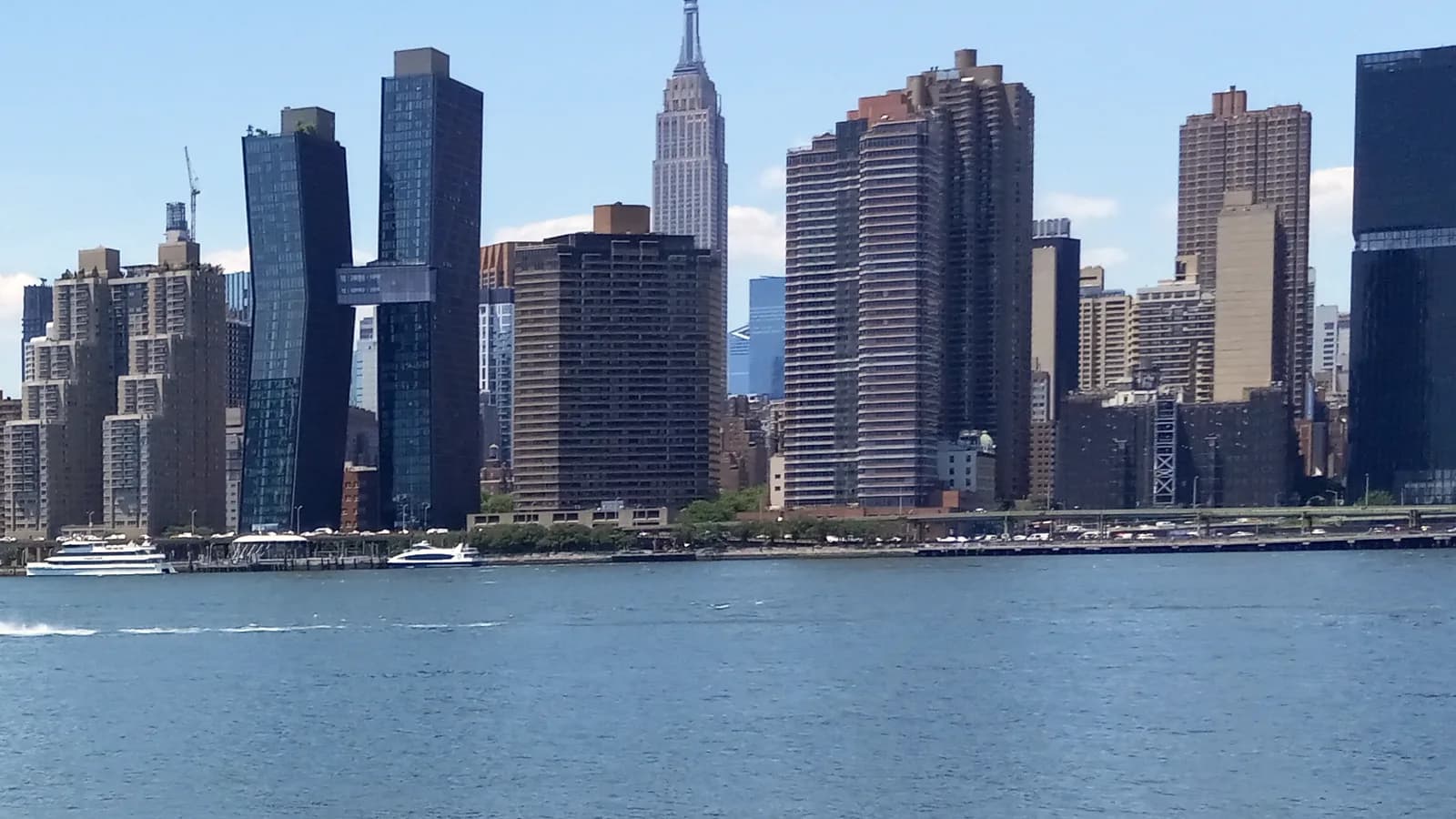
A new Manhattan condominium is often bought from a floor plan, a materials board and a view study, sometimes before the building has its certificate of occupancy. The buyer weighs ceiling height, how deep the living space runs back from the glass, the stone and timber specified for kitchens and baths, and which way the main windows face. Only then does the purchase price come into the conversation. In August and September 2026 two developer-side sales firms published figures on how much of this kind of apartment is left to buy, and read quickly they seem to disagree. Corcoran Sunshine Marketing Group counts the stock of unsold new-development apartments at its lowest level since the end of 2014. Brown Harris Stevens Development Marketing expects more new buildings to open sales this autumn than in any fourth quarter of the past ten years. Both statements rest on the firms' own data, and they describe different things.
Where the numbers come from
Corcoran Sunshine and Brown Harris Stevens Development Marketing (BHSDM) are both hired by developers to market and sell new condominiums in Manhattan. A shortage of new stock is a helpful message for a firm selling new stock, so their counts are reported here without their commentary. Corcoran Sunshine's full quarterly report is sent to clients only. The figures below come from the summary the firm published on its own LinkedIn page on 12 August 2026. BHSDM's figures come from its own LinkedIn post of 11 September 2026.
Two further sources give a check from outside the development-marketing business. Jonathan Miller, whose appraisal firm Miller Samuel has published a quarterly Manhattan sales report for 32 years, released his second-quarter 2026 report on his Housing Notes site on 2 July 2026, in a new arrangement with the trade publication The Real Deal. Brown Harris Stevens, the brokerage that owns BHSDM, publishes a monthly count of Manhattan apartments for sale based on the Real Estate Board of New York's listing service. As a brokerage it earns commission on the sales it reports, which is its commercial interest in these figures.
How low the stock of new apartments is
Corcoran Sunshine reported that Manhattan's new-development inventory fell 24 percent in the year to the second quarter of 2026, to 2,712 units. The firm described it as the largest annual percentage fall in nearly thirteen years and the lowest figure since the fourth quarter of 2014.
Corcoran Sunshine's public summary does not set out how the firm defines inventory. Miller's report measures something different, the new-development apartments actually listed for sale. Developers often release apartments in stages and hold part of a building back, so a listing count can sit well below the number of unsold apartments. At the end of the second quarter of 2026 there were 445 new-development apartments on the market in Manhattan, 62.2 percent fewer than a year earlier, while listings of existing apartments fell 7.2 percent to 6,604. On Miller's count, listed new-development supply fell far more steeply than resale supply.
The shortage reaches beyond new buildings at the top of the market. Miller counted 796 listings in Manhattan's luxury tier, which he defines as the top 10 percent of sales and which began at US$4.45 million in the quarter (about S$5.7 million at European Central Bank reference rates of 28 September 2026). He described it as the lowest luxury supply in the 22 years he has recorded it. Brown Harris Stevens counted 3,059 condominium listings of all kinds at the start of September 2026, against 3,271 a year earlier, equal to 6.3 months of sales at the recent pace. The brokerage treats six to seven months as a balanced market.
How the autumn launches fit
BHSDM expects 20 new buildings with a combined 768 units to start sales in Manhattan in the fourth quarter of 2026, which it describes as the most in any fourth quarter over the last ten years. Corcoran Sunshine, on its own count, expects about 1,000 new-development units to launch in the rest of 2026, bringing the year's total to about 1,300. That would be 36 percent more than in 2025 and still 12 percent below the annual average from 2016 to 2025.
A low stock of unsold apartments and a large autumn release can both be accurate. Inventory is what remains unsold at a given moment. Launches are apartments added to it. Over the past year sales absorbed new apartments faster than developers brought them to market, which is how the inventory fell to its lowest point since 2014. The autumn launches add stock again, but BHSDM itself expects its measure of available supply to end 2026 below where it began, continuing the annual declines it has recorded since 2021. Launch totals also overstate what a buyer can choose from at once. A building that opens sales with 80 units may list a fraction of them in its first months and hold the rest back.
The new surcharge on second homes
A new annual surcharge on New York City homes that are not anyone's primary residence changes the cost of holding an apartment in the way many prime buyers intend to use one. Article 30-C of the New York Tax Law, enacted in the state budget and in force since 28 May 2026 according to the city's Department of Finance, imposes the surcharge beginning on 1 July 2026, and the article is repealed on 30 June 2031. The Department of Finance says the first charges will appear on the property tax bill due on 1 January 2027.
For the city's tax years 2026-27 and 2027-28, a condominium or co-op apartment is covered when the Department of Finance values it at US$1 million or more and it is not the primary residence of the owner, a tenant, an immediate family member, the majority holder of an owning company or the sole beneficiary of an owning trust. A single yearly rate applies to the whole of that value, set by the band the value falls in. It is 4.0 percent of the whole value for units valued from US$1 million up to and including US$3 million, 5.25 percent for units valued above US$3 million up to and including US$5 million, and 6.5 percent for units valued above US$5 million. Houses of one to three families are covered from a value of US$5 million, at 0.8 percent of the whole value from US$5 million up to and including US$15 million, 1.05 percent above US$15 million up to and including US$25 million, and 1.3 percent above US$25 million. These are percentages of the Department of Finance's market value, which for condominiums and co-ops is generally well below a sale price. The department explains that a condominium it values at US$1 million is generally comparable to a house valued at US$5 million. From 1 July 2028 the law moves apartments to a valuation based on comparable sales and to the same US$5 million threshold and 0.8 to 1.3 percent rates as houses.
Two exclusions in the law bear directly on new development. A property that needs a certificate of occupancy and has not yet received one is excluded, and so is a condominium or co-op apartment covered by an offering plan that the sponsor has not yet sold. An unsold apartment in a new building therefore sits outside the surcharge while the developer holds it. Once it is sold to a buyer who will not live in it as a primary residence, it can fall within it. The surcharge does not lower the purchase price. It adds a yearly holding cost that depends on how the apartment will be used.
The city's administration of the surcharge is being challenged in court. In a petition filed in the Supreme Court of the State of New York, Richmond County, on 7 August 2026 (index number 85217/2026), three homeowners contest the way the city published a list of properties and sent notices asking owners to claim an exemption. They state that they are not challenging the law itself. Its status could not be confirmed as of 29 September 2026. The Department of Finance has extended the deadline for exemption applications for the 2026-27 year to 6 October 2026.
What to settle before signing for a new apartment
- Which count describes this building? A development may have unsold apartments that do not appear in any listing. Ask the sales team how many units remain unsold and how many are being released now.
- What does the offering plan say? New condominiums in New York are sold under offering plans filed with the state Attorney General, whose online database lists each plan and its amendments, including amendments that raise or lower the total offering price and those that add the building's budget.
- What will it cost to hold? Miller's report put the average monthly condominium common charge plus real estate tax for apartments that sold in the second quarter of 2026 at US$4,466, or US$3.37 per square foot. For an apartment that will not be a primary residence, add the surcharge on the Department of Finance's value of that unit once the building has a certificate of occupancy and the sponsor has sold the unit.
- What will the outlook be in ten years? In a city still adding towers, the view and daylight a plan promises depend on what may later be built on neighbouring sites, a question for the buyer's lawyer and a zoning review rather than for the rendering.
- How will the apartment be used? A primary residence, a second home used a few weeks a year and a rented apartment carry different tax treatment under the surcharge rules, and different costs. The purchase price is the cost of entry. It says nothing about what the apartment will earn or be worth later.
Where this leaves a buyer
On Corcoran Sunshine's count, Manhattan's stock of unsold new apartments at mid-2026 was the lowest since late 2014, and on Miller's count listed new-development supply had fallen by more than half in a year. An autumn of launches that BHSDM describes as the largest fourth quarter in a decade adds to that stock without, on the firm's own projection, restoring it to where it stood at the start of the year. For buyers who will not live in the apartment full time, the city's new surcharge now sits on top of common charges and property tax from the first bill due in January 2027. The figures do not tell a buyer whether to sign this autumn or later, and nothing here sets one Manhattan building or neighbourhood above another. The federal baseline for buyers from abroad in the United States is set out in Foreign and non-resident buyer rules, and survey figures are explained in How to read a prime-price survey. This is not legal, tax, or investment advice. Confirm with a qualified professional in the place.
Sources
All sources read 29 September 2026 (Singapore time).
- Corcoran Sunshine Marketing Group, "Q2 Market Update," LinkedIn, 12 August 2026 (Manhattan new-development inventory down 24% to 2,712 units, lowest since the fourth quarter of 2014, largest annual percentage fall in nearly thirteen years. About 1,000 units projected to launch in the rest of 2026 for about 1,300 in the year, 36% above 2025 and 12% below the 2016 to 2025 annual average. The full report is client-only.)
- Brown Harris Stevens Development Marketing, "Exclusive Numbers: Manhattan's Incoming Condo Inventory," LinkedIn, 11 September 2026 (20 new buildings and 768 units to launch sales this fall, the most in any fourth quarter over the last ten years. Real Supply projected to end the year below where it began, continuing annual declines since 2021.)
- Jonathan Miller, Miller Samuel, "2Q26 Manhattan Sales Inventory Remains Lean," Housing Notes, 2 July 2026 (New-development listing inventory 445, down 62.2%. Existing inventory 6,604, down 7.2%. Luxury listings 796, lowest in 22 years, luxury threshold US$4,450,000. Condo common charge plus real estate tax US$4,466 a month, US$3.37 per square foot.)
- Brown Harris Stevens, Manhattan Inventory Report, September 2026 (PDF) (Condominium listings 3,059 at the start of September 2026 against 3,271 in September 2025. Months' supply 6.3 against 6.7. Listings from the Real Estate Board of New York's listing service. Six to seven months described as balanced.)
- New York State Senate, Tax Law Article 30-C, City Surcharge on Property That Does Not Serve as a Primary Residence (Sections 1350 to 1356, revision of 5 June 2026. Imposed beginning 1 July 2026. Repealed 30 June 2031. Section 1351 exclusions for property awaiting a certificate of occupancy and for unsold sponsor units under an offering plan. Section 1353 rates.)
- New York State Senate, Senate Bill S9009C, 2025-2026 session (Budget bill for the 2026-27 state fiscal year, status signed by the Governor. Article 30-C added in the part authorising the surcharge.)
- NYC Department of Finance, Non-primary residence property surcharge (Thresholds and rates for 2026-27 and 2027-28. Primary-residence exemptions. Law in effect from 28 May 2026. Exemption deadline extended to 6 October 2026. Charges on the bill due 1 January 2027. Condominium value of US$1 million generally comparable to a house valued at US$5 million.)
- O'Brien, Morano and Hedley v. City of New York et al., Verified Article 78 Petition and Complaint, Supreme Court of the State of New York, Richmond County, index no. 85217/2026, filed 7 August 2026 (PDF, copy hosted by Courthouse News Service) (Challenges the city's roll publication and notices. States it does not challenge the state statute.)
- Office of the New York State Attorney General, Offering Plan Database (Database of submitted offering plans and amendments, including amendment codes for price increases and decreases and for budgets.)
- European Central Bank, euro foreign exchange reference rates (Rates for 28 September 2026, crossed via the euro for the one currency conversion in the text.)