
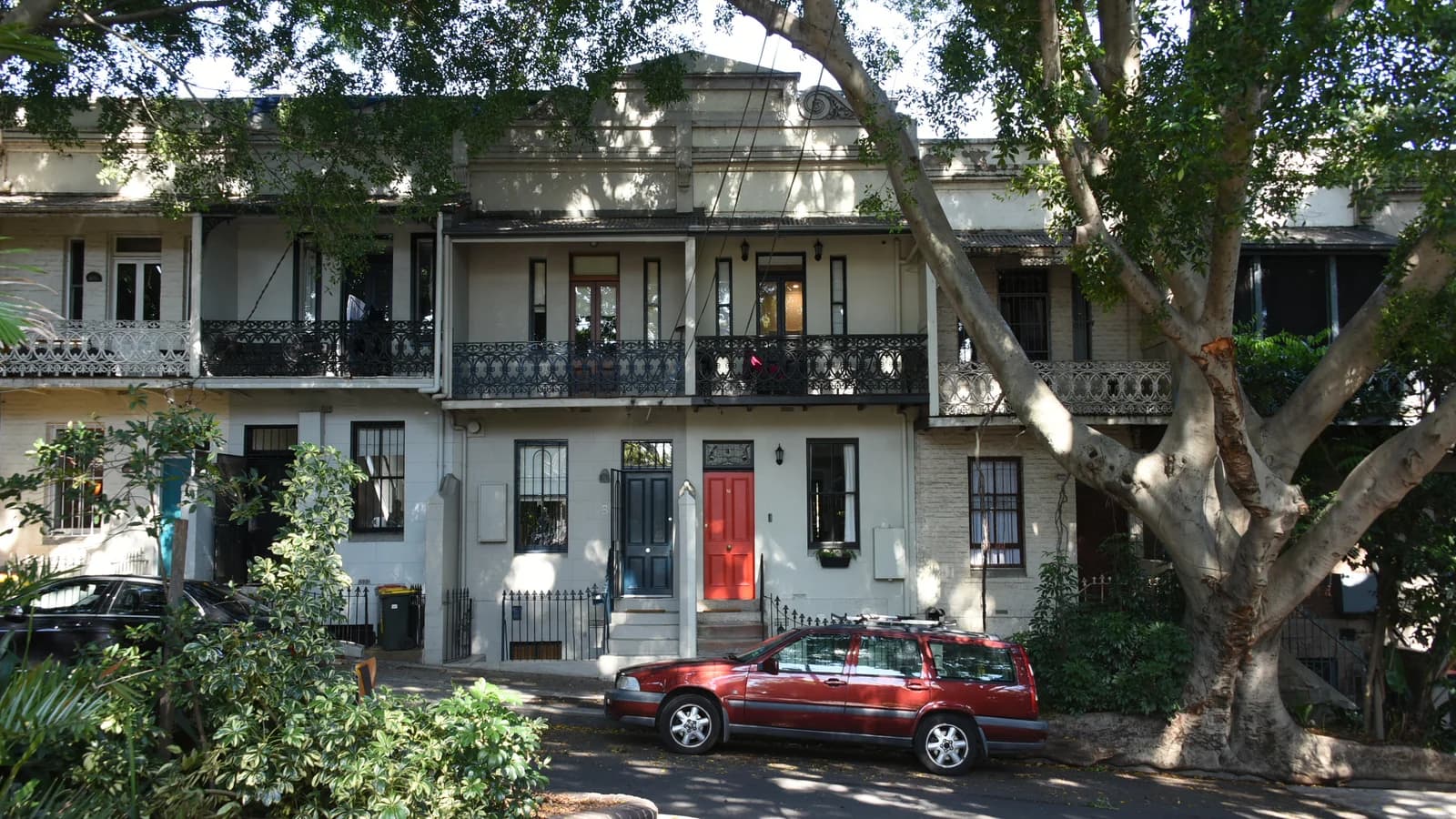
National dwelling values fell 1.1% in September, according to Cotality's Home Value Index released on 1 October 2026, the sixth monthly decline in a row. The national index now stands 5.2% below its March 2026 record and 3.7% lower over the quarter, while the annual change is flat at 0.0%. Every capital city except Darwin lost value during the month, and Cotality counts 97% of capital-city suburbs as lower over the three months to the end of September.
Brisbane replaced Sydney as the weakest capital in September, falling 1.5% against Sydney's 1.4%. Sydney is still furthest from its high, at 8.6% below a February 2026 peak, with values down 7.0% over twelve months. Darwin rose 0.4%, which still leaves it 0.2% under its July 2026 high.
| Market | September change | Below peak | Peak month |
|---|---|---|---|
| National | -1.1% | -5.2% | March 2026 |
| Sydney | -1.4% | -8.6% | February 2026 |
| Brisbane | -1.5% | -5.4% | May 2026 |
| Darwin | +0.4% | -0.2% | July 2026 |
Cotality's monthly index, which uses month-end values, puts Sydney's peak at the end of February 2026, while its daily index edged a little higher into mid-March before turning down. Both series show Sydney about 8.5 to 8.6% below its high at the end of September. Cotality revises both indices every month for twelve months, so earlier readings can move after publication.
The Reserve Bank of Australia raised its cash rate target by 25 basis points to 4.60% on 29 September 2026, the fourth increase this year, as covered in RBA raises cash rate to 4.60 per cent. Falling values and higher rates hit a leveraged owner in two separate places. Lower values shrink equity, because the loan balance does not fall with the property. Higher rates lift repayments and reduce the loan a lender will approve on the same income. Cotality estimates that the four rises since February have cut the borrowing capacity of a household on the median income by almost A$90,000, or about 9%. That squeeze on lending is the backdrop to the developer collapse covered in the Bathla administration and Sydney's private-credit stack.
Worked example, hypothetical figures. A Sydney home valued at A$1,000,000 at the February peak, carrying a loan of A$800,000, has an 80% loan-to-value ratio and A$200,000 of equity. Apply Sydney's 8.6% fall and the value becomes A$914,000. The loan is unchanged, so the ratio rises to about 87.5% and equity drops to A$114,000, a 43% loss of the owner's stake from an 8.6% move in price. If a lender passed September's 25 basis points through in full, annual interest on that loan would rise by about A$2,000. An owner who refinances or draws on equity is assessed on both changes at once, the lower valuation and the higher rate.
Limits
The worked example uses invented round numbers to show the arithmetic and does not describe any real property, lender or loan. Cotality's indices measure markets, not individual homes, and are revised each month for twelve months. The cash rate target is not a mortgage rate, and pass-through varies by lender and loan type. Nothing here predicts where values or rates go next.
Sources
Sources read 1 and 2 October 2026.
- Cotality, "Australian housing values down for sixth straight month in September", Home Value Index release, 1 October 2026
- Cotality, "Home Value Index, October 2026", monthly report with results to 30 September 2026
- Cotality, "Cotality indices", daily Home Value Index series generated 1 October 2026 and FAQ "Does the Cotality Home Value Index revise?"
- Cotality, Tim Lawless, "RBA rate hike deepens housing market headwinds as borrowing power shrinks", 29 September 2026
- Reserve Bank of Australia, "Statement by the Monetary Policy Board: Monetary Policy Decision", media release 2026-27, 29 September 2026