
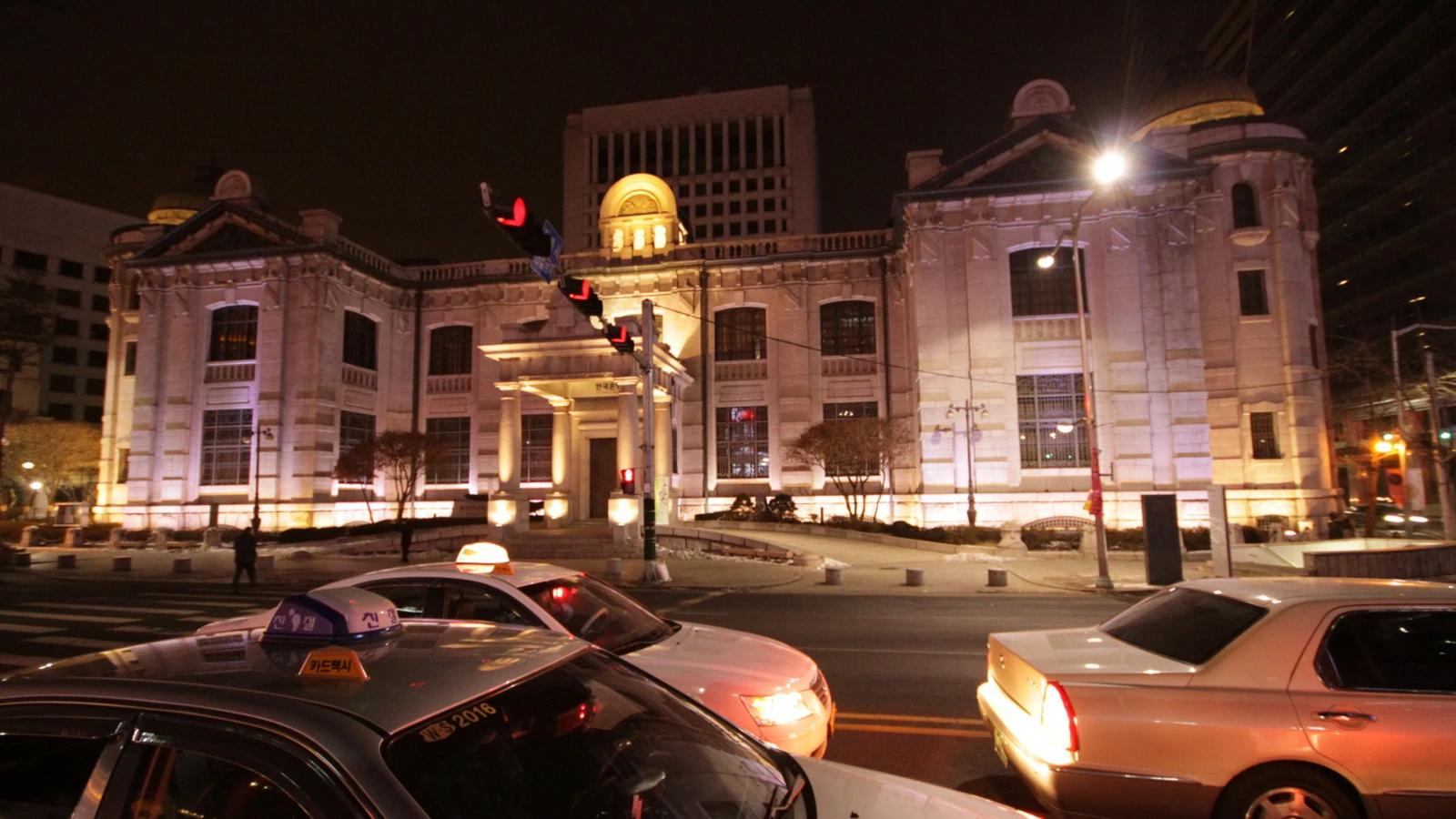
The Bank of Korea's Monetary Policy Board raised the Base Rate by 25 basis points, from 3.00% to 3.25%, on 26 November 2026. Five members backed the increase, while Hwang Kunil and Lee Soohyung voted to keep the rate at 3.00%.
The Bank's Base Rate history list shows three increases in 2026, on 16 July, 27 August and now 26 November. The rate stood at 2.50% before the July meeting, so it is now 0.75 percentage points higher. The same list shows the rate was last at 3.25% between 11 October and 28 November 2024, when it was cut to 3.00%.
| Change date | Base Rate |
|---|---|
| 29 May 2025 | 2.50% |
| 16 July 2026 | 2.75% |
| 27 August 2026 | 3.00% |
| 26 November 2026 | 3.25% |
The Board said domestic growth has strengthened further, that inflation is projected to stay above target for a considerable time and that financial stability risks persist. The Bank forecasts growth at 3.9% this year and 4.1% next year, both higher than its August forecasts of 3.3% and 2.9%. Consumer price inflation and core inflation were both 2.8% in October, according to the statement.
On property, the statement says household loan growth accelerated, with increases in both housing-related and other loans. It adds that the pace of housing price increases in Seoul and its surrounding areas slowed somewhat, but that expectations of rising prices remain high. In the opening remarks to the press conference, the Bank said prices kept falling in some higher-priced areas, while lower- and mid-priced areas of Seoul and parts of Gyeonggi Province continued to rise sharply. The Board said it will decide the timing of any further increases while assessing inflation, growth and financial stability.
For a buyer with a won-denominated floating-rate loan, the Base Rate is the policy benchmark, but each lender sets how much of a move reaches its own loan rates and when. As a hypothetical example, a 1 billion won interest-only floating balance costs 2.5 million won more a year for each 25 basis points passed through in full. A loan already fixed is not repriced by the decision.
A buyer paying from dollar savings faces a different ledger. The asking price is set in won, so the cost at home depends on the exchange rate on settlement day. The Board said the won held broadly stable against the US dollar despite dollar strength and outflows of foreign stock investment funds, helped by a large current account surplus.
Recent Seoul price data are covered in Seoul apartment prices slow to 0.01% as the board's Gangnam group falls 0.11% and its Gangbuk group rises 0.15% and Seoul housing prices rise 0.65% in October as the monthly pace slows again. The market overview is at Seoul, South Korea.
Sources
Sources read 26 November 2026.
- Bank of Korea, Monetary Policy Decision & Opening Remarks to the Press Conference (November 26, 2026), decision statement and opening remarks, including the 3.00% to 3.25% increase, the five-to-two vote, the growth forecasts, October inflation, household loans, Seoul-area housing and the won, read 26 November 2026
- Bank of Korea, 한국은행 기준금리 추이, Korean-language Base Rate history list with change dates from 2022 to 26 November 2026, read 26 November 2026